A flat caravan battery can turn a good trip into a scramble for ice, lights, and phone charge. The best caravan battery setup is not automatically the biggest or most expensive one. It is the system that reliably runs your gear, recharges properly, fits your available space, and stays safe on rough roads.
For a weekend at powered parks, your needs are very different from a family spending five nights free camping with a compressor fridge, inverter, and solar panels. Start with how you actually travel, then build the battery system around that.
What makes the best caravan battery setup?
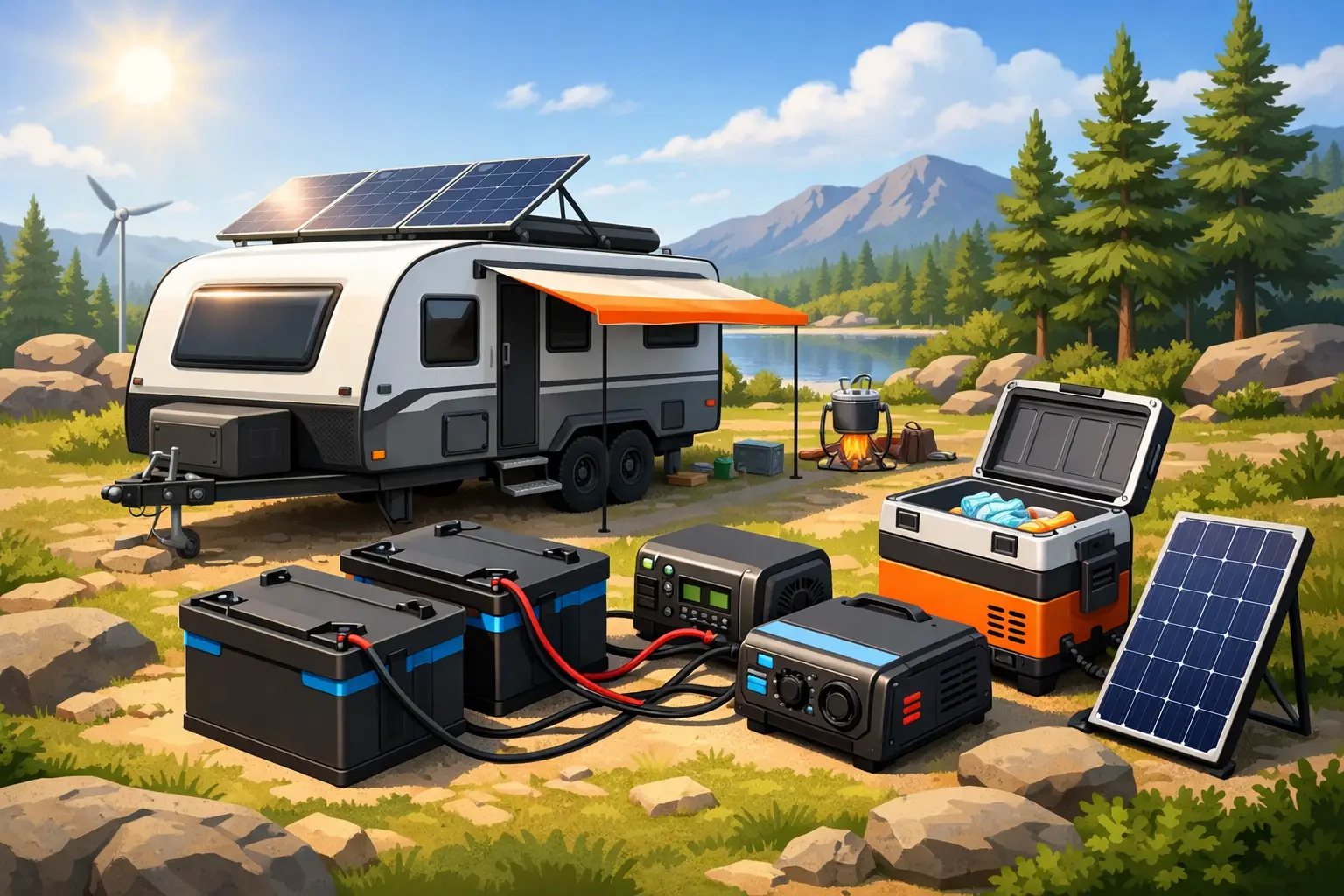
A practical caravan setup has four parts working together: a house battery bank, a charging method from the tow vehicle, solar charging for time off-grid, and correctly sized wiring with fuses. Miss one of those pieces and even a quality battery can disappoint.
The first decision is what the battery needs to run. Lights and a water pump use modest power. A compressor fridge, diesel heater fan, CPAP machine, TV, coffee machine, and inverter can change the numbers quickly. Write down each appliance, its watts or amps, and how many hours a day you expect to use it.
For 12-volt equipment, amp-hours are a useful starting point. A fridge drawing an average of 2 amps over 24 hours uses roughly 48 amp-hours per day. Add your other loads, then allow a safety margin for hot weather, shaded campsites, and the fact that batteries do not always perform exactly as the label suggests.
If you usually stay one night off-grid and drive most days, a single 100Ah lithium battery may be enough for a modest setup. If you camp for several days, run a fridge continuously, and want a little backup for cloudy weather, 200Ah of usable capacity is a more realistic target. Heavy inverter use may call for more battery capacity, more solar, and a stronger charging system.
Do not size a battery around an appliance you will only use occasionally without considering its actual demand. A high-wattage kettle or microwave through an inverter can drain a small battery bank fast. In many caravans, gas cooking or a generator at suitable sites is more practical than trying to power every household appliance from 12 volts.
Lithium or AGM for a caravan?
Lithium iron phosphate, commonly called LiFePO4, is usually the best choice for frequent off-grid caravan travel. It provides more usable capacity, charges faster, weighs less, and holds voltage better under load than an AGM battery. A 100Ah lithium battery can often provide close to 80 to 100Ah of usable power, while an AGM battery is generally best kept above roughly 50 percent state of charge for a long service life.
That said, AGM still has a place. It costs less upfront, works well for occasional campers, and can suit a basic system with low power demands. If your caravan already has older charging equipment and you only need lights, a water pump, and a short stay away from mains power, AGM can be a sensible value option.
Lithium needs compatible charging equipment. The battery charger, DC-DC charger, and solar regulator must have a lithium profile or settings that match the battery manufacturer’s requirements. Most lithium batteries also include a battery management system, but that does not replace proper fusing, cable sizing, or installation.
Cold conditions deserve attention too. Many lithium batteries should not be charged below freezing unless they have low-temperature charge protection or built-in heating. That is rarely an issue for a coastal trip, but it matters for winter travel in alpine areas.
Build the charging system around your travel style
A battery bank only works as long as you can put power back into it. The most reliable setup uses more than one charging source.
A DC-DC charger takes power from the tow vehicle and delivers the correct charging profile to the caravan battery. It is particularly important with modern vehicles, where a basic connection through the trailer plug may not provide enough voltage or current to properly charge an auxiliary battery. A 20A, 25A, or 40A charger may suit the job, depending on your battery capacity, driving habits, cable run, and alternator capability.
Solar is what keeps an off-grid caravan comfortable once you stop driving. Fixed roof panels are convenient because they work every day without setup, but they may be shaded by trees or parked in the wrong direction. Portable panels let you chase the sun, but they need to be packed away, secured, and monitored. Many serious free campers use roof-mounted solar for everyday charging and a portable panel for backup.
As a rough guide, 200W of solar can be a useful starting point for a small lithium setup running a fridge and basic 12-volt loads. It will not produce its rated output all day, especially in winter, cloud, heat, or shade. If your daily usage is high, 300W to 500W of solar with adequate battery capacity gives you more breathing room.
When connected to powered sites, a quality 240-volt battery charger should maintain and recharge the house battery. Make sure it is compatible with your battery chemistry. Do not assume the charger fitted years ago is suitable for a new lithium upgrade.
Keep the starter battery and house battery separate
Your caravan’s house battery should run the fridge, lights, water pump, and accessories. Your tow vehicle’s starter battery should remain protected for starting the engine. A properly installed DC-DC charger or battery isolator helps prevent your camping loads from flattening the vehicle battery while you are parked.
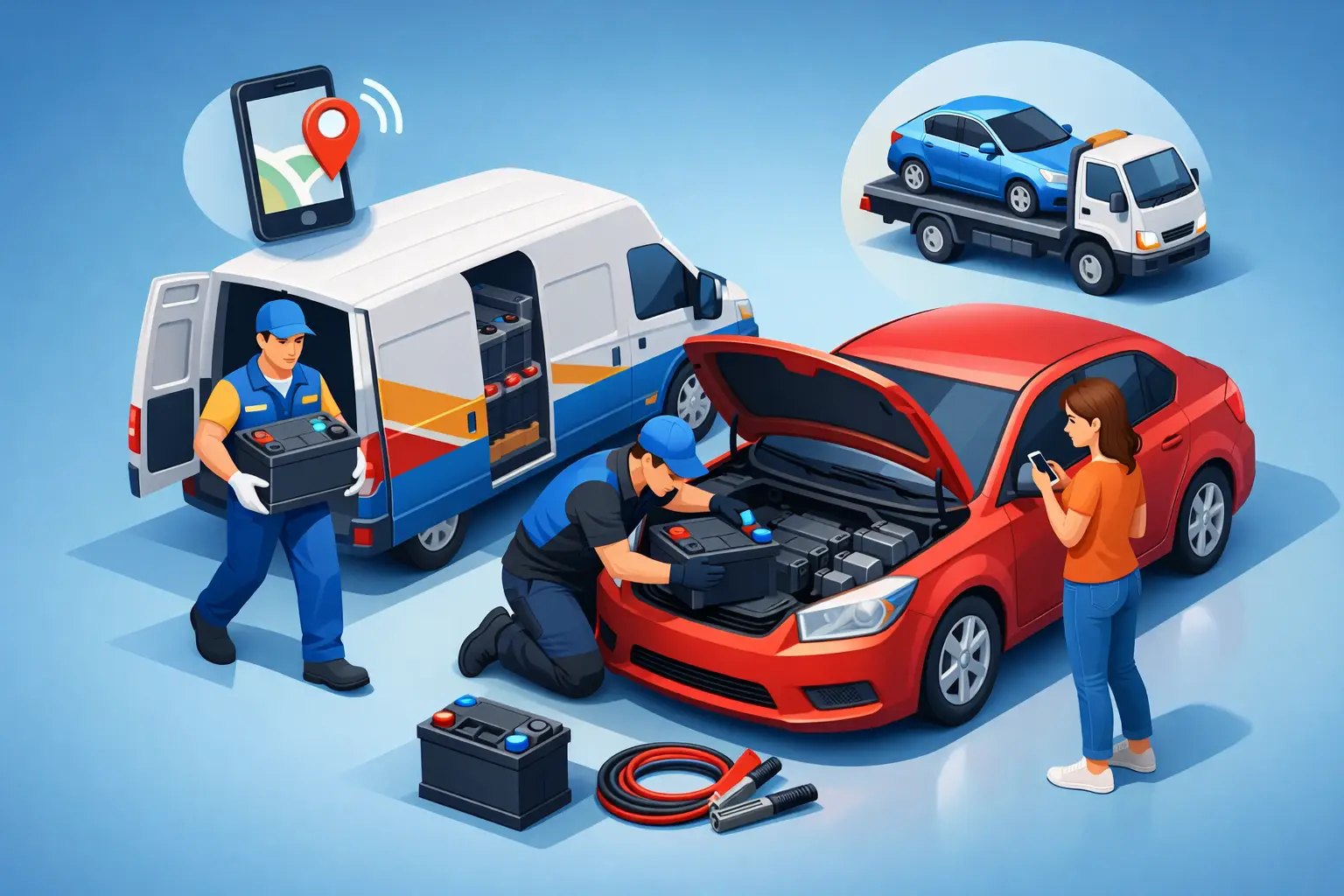
This separation matters most after a long day on the road. You do not want to discover that charging devices or running a fridge overnight has left you unable to start the tow vehicle the next morning. If you need a battery system checked or fitted around Brisbane, Ipswich, or the Gold Coast, Battery Australia can help match the right battery and charging components to the job.
Wiring and protection are not optional
A good battery installed with undersized cable is still a poor setup. Voltage drop increases over long cable runs, reducing charging performance and causing appliances to behave unpredictably. Inverters are especially demanding because they can draw high current from a 12-volt battery.
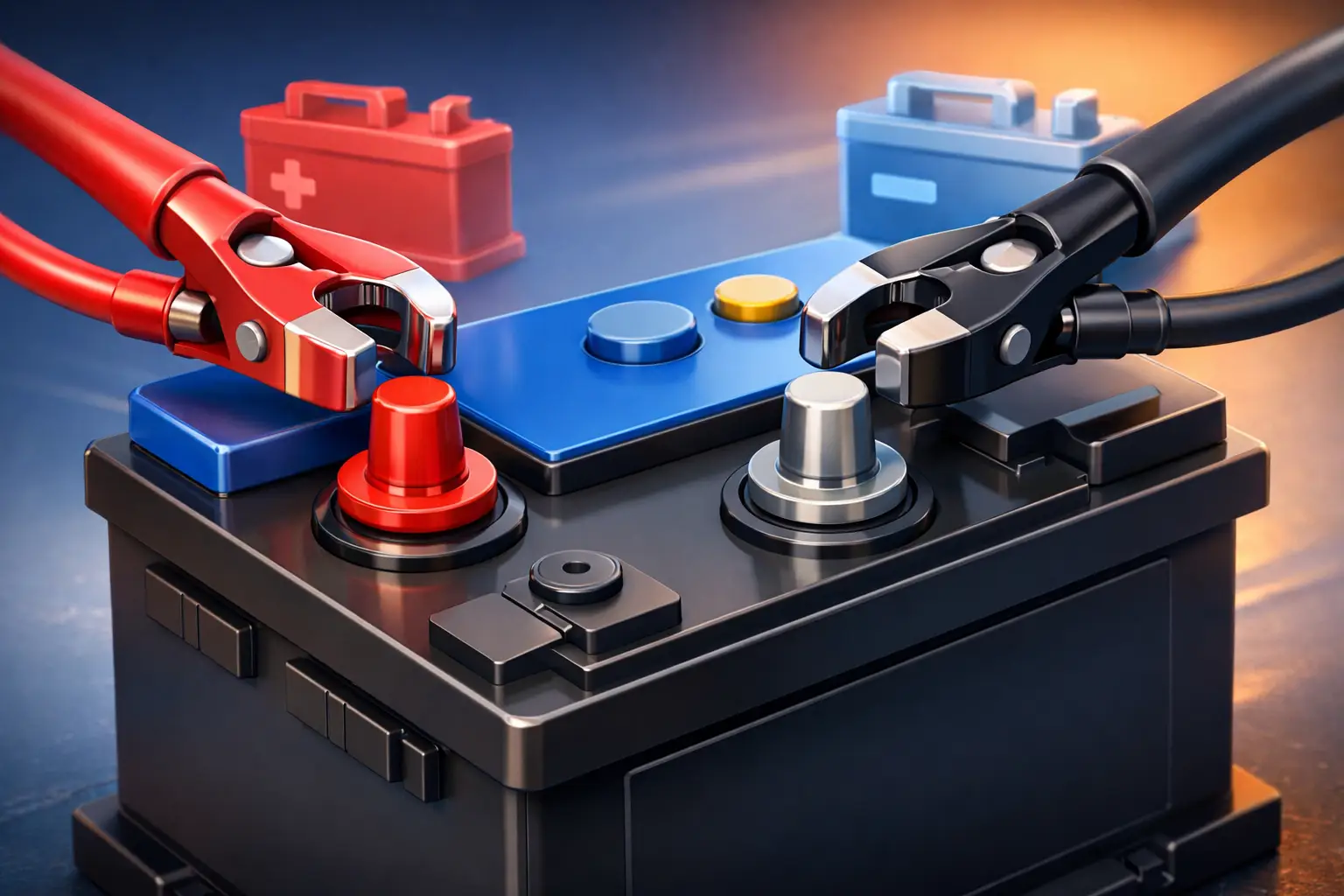
Every positive cable leaving the battery should have suitable circuit protection fitted close to the battery. Use correctly rated fuses or circuit breakers, secure all cables against vibration, and protect wiring where it passes through metal or cabinetry. Battery isolators make servicing safer and give you a quick way to disconnect the system if something goes wrong.
Avoid mixing old and new batteries, different battery brands, or different battery types in the same bank. If you need two batteries in parallel, use matching units of the same age and capacity. Uneven batteries can charge and discharge differently, shortening the life of the whole bank.
Battery location also matters. Mount batteries securely in a dry, accessible area away from heat and damage. AGM batteries need sensible ventilation precautions. Lithium batteries do not vent in normal operation like lead-acid batteries, but they still need a protected location and manufacturer-approved mounting arrangement.
A setup that fits real caravan use
For many couples and families, a strong all-round system is a 200Ah LiFePO4 battery bank, a 25A to 40A DC-DC charger, 300W to 400W of solar with an MPPT regulator, a lithium-compatible mains charger, and protected heavy-duty cabling. That setup can comfortably support a compressor fridge, lighting, water pump, USB charging, fans, and modest inverter use when managed sensibly.
A lighter traveler may be better served by 100Ah of lithium, 150W to 200W of solar, and a smaller DC-DC charger. There is no prize for carrying capacity you never use. Extra battery weight, cost, and installation space are real trade-offs.
Before heading away, test the system at home for a full day. Run the fridge, check solar input, confirm the charger operates correctly, and learn what your battery monitor is telling you. The best caravan battery setup is the one you understand before you are parked miles from the nearest powered site.