
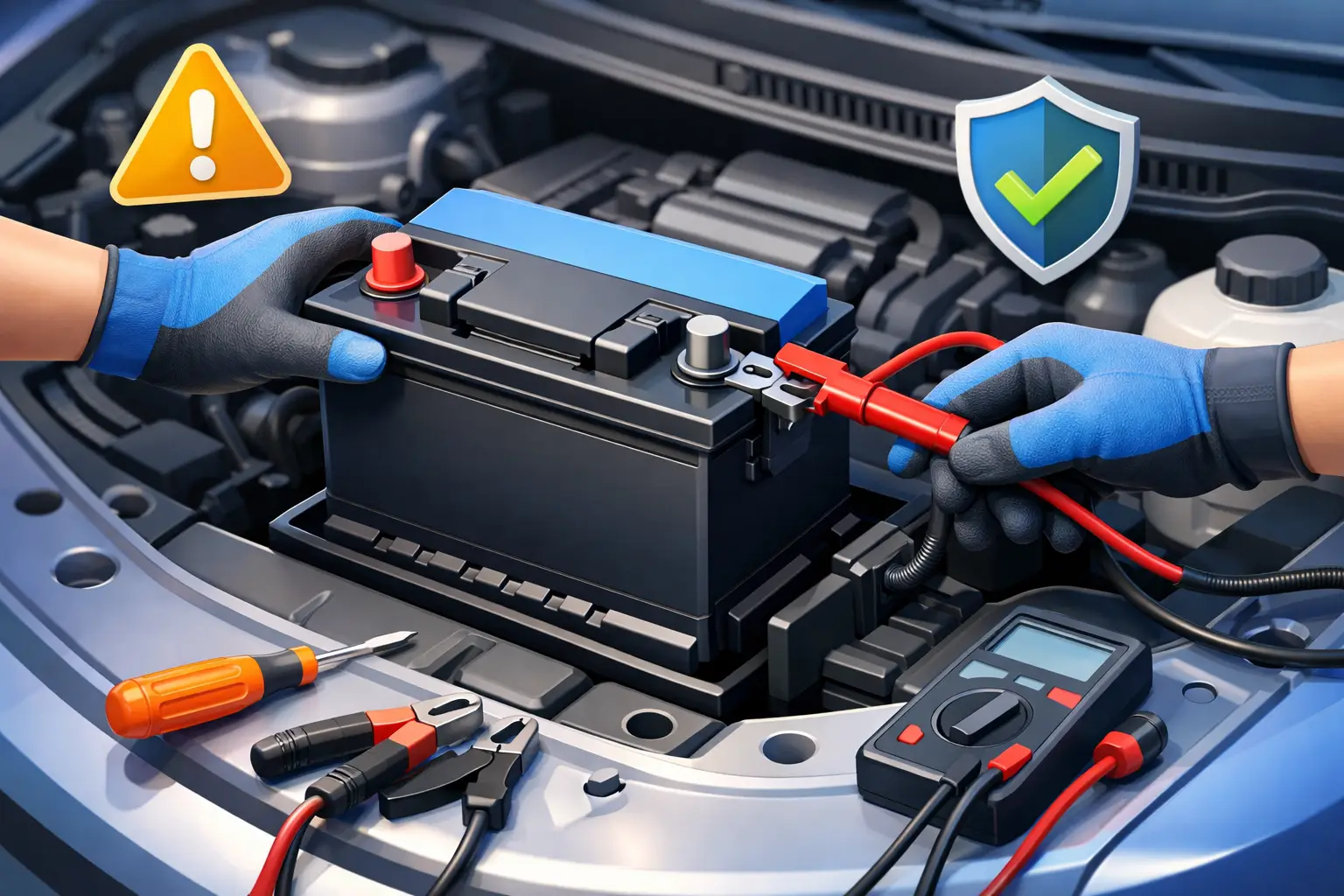
A dead battery always seems to show up when you’re already late, parked in a bad spot, or stuck with a car that has to move now. If you’re wondering how to fit a car battery yourself, the good news is that most standard passenger vehicles make it a straightforward job – as long as you follow the right order and don’t rush the basics.
This isn’t a job to wing. Modern vehicles can be sensitive to voltage loss, battery placement can be awkward, and mixing up the terminals can get expensive fast. If the battery is buried under covers, tucked into the trunk, or your car has a battery management system that may need resetting, it’s often smarter to have it fitted properly. But if your setup is simple, here’s how to handle it safely.
Before you fit a car battery, check the basics
The first step in how to fit a car battery is making sure you actually have the right battery. Matching by looks alone is where plenty of DIY installs go wrong. You need the correct battery size, terminal layout, and power rating for your vehicle.
Check the battery label or your owner’s manual for the group size and specs. Pay attention to cold cranking amps, reserve capacity, and whether the vehicle requires a standard flooded battery, AGM, EFB, or another type. Start-stop systems in particular are less forgiving. Fit the wrong battery and you can shorten battery life, trigger warning lights, or create charging issues.
It’s also worth confirming where the battery sits. In many cars it’s under the hood, but some vehicles place it in the trunk, under a seat, or beneath trim panels. If access involves removing braces or electronic covers, take your time and keep track of every fastener.
What you’ll need
You don’t need a full workshop to fit a battery, but you do need a few basics. A wrench or socket set is usually enough for terminal clamps and the hold-down bracket. Gloves and eye protection are a smart call. A battery terminal brush or cleaning tool helps if the clamps are corroded, and a rag is useful for wiping dirt and residue away.
If you have a memory saver, you can use it to help preserve radio presets and some electronic settings during the swap. Not every car needs it, and not every driver bothers, but on some vehicles it can save a little reset work later.
How to fit a car battery step by step
1. Turn the vehicle off completely
Shut the engine off, remove the key, and make sure all accessories are off. That includes headlights, interior lights, and anything plugged into the 12V outlet. If the vehicle has been running, let things settle for a minute before you start.
Set the parking brake and work in a safe, level spot. Batteries are heavy, and you don’t want the car moving while you’re leaning over the engine bay.
2. Identify the negative and positive terminals
Before touching anything, find the terminal markings. The positive terminal is usually marked with a plus sign and may have a red cover. The negative terminal is marked with a minus sign and is often connected to a black cable or directly to the vehicle chassis.
This matters because terminal order is one of the most important parts of fitting a battery safely.
3. Disconnect the negative terminal first
Always remove the negative terminal before the positive. This reduces the chance of creating a short if your tool touches metal on the vehicle while loosening the clamp.
Loosen the negative clamp and lift it clear of the battery post. Tuck it aside so it can’t spring back into place.
4. Disconnect the positive terminal
Once the negative side is off, remove the positive clamp. If there are protective covers, clips, or sensor connectors, move them carefully. Don’t force anything. Some terminals are tighter or more delicate than they look.
5. Remove the battery hold-down bracket
Most car batteries are secured by a top clamp, side bracket, or bottom hold-down. Remove this before trying to lift the battery out. If you skip this step and force the battery, you can crack the casing or damage the tray.
Keep bolts and brackets together so you’re not hunting for parts during reassembly.
6. Lift the old battery out carefully
Car batteries are heavier than many people expect. Lift with both hands and keep the battery upright. Tipping it can leak acid if the casing is damaged or the battery is an older flooded type.
If the battery feels jammed in place, check again for hidden brackets or trim. Don’t pry against surrounding wiring or plastic covers.
7. Inspect and clean the tray and clamps
Before the new battery goes in, clean the battery tray and terminal clamps. Remove corrosion, dirt, and loose debris. Corrosion on the clamps can interfere with the connection and lead to hard starting even with a brand-new battery.
If you spot frayed cables, broken terminal ends, or severe corrosion eating into the wiring, stop there. A new battery won’t fix a damaged cable.
8. Place the new battery in the correct position
Set the new battery into the tray with the terminals facing the same direction as the old one. Double-check this before reconnecting anything. If the terminals are reversed relative to the cables, you’ve likely got the wrong battery or it’s positioned incorrectly.
Make sure the battery sits flat and secure in the tray.
9. Refit the hold-down bracket
Tighten the battery hold-down so the battery can’t move around. It needs to be secure, but not crushed into place. An unsecured battery can vibrate, damage the casing, and wear out early.
10. Connect the positive terminal first
When installing the new battery, the order is the opposite of removal. Connect the positive terminal first and tighten the clamp until it’s snug. It should not rotate on the post by hand.
If the clamp is loose, the vehicle may crank poorly or lose power intermittently.
11. Connect the negative terminal last
Now reconnect the negative terminal and tighten it securely. Once both clamps are fitted, replace any protective terminal covers and make sure nothing is left loose around the battery.
That sequence matters. Negative off first, negative on last. It’s a small detail that prevents big mistakes.
Common mistakes when fitting a car battery
Most battery installs go wrong for simple reasons, not complicated ones. The most common mistake is choosing the wrong battery type or terminal layout. After that, it’s usually poor clamp contact, skipped hold-down brackets, or connecting terminals in the wrong order.
Another issue is assuming every car reacts the same way after power loss. Some vehicles reset without drama. Others may lose window auto settings, radio presets, idle memory, or require system relearns. On newer vehicles, battery registration or coding may be needed after replacement. If your car falls into that category, fitting the battery is only part of the job.
When DIY is fine – and when it’s better to call for help
If your battery is easy to access, the replacement matches exactly, and your vehicle is a standard setup without extra electrical complexity, fitting it yourself can be reasonable. For many older sedans, hatchbacks, SUVs, and pickup trucks, it’s a basic maintenance task.
But there are times when DIY stops making sense. If you’re stranded roadside, dealing with a flat battery in a tight parking garage, unsure about compatibility, or working on a European vehicle with battery coding requirements, getting expert help is often faster and cheaper than fixing a mistake afterward.
That’s also true if the battery failed for a reason beyond age. A parasitic drain, charging system fault, or bad alternator can leave you with the same problem again even after installing a new battery. A proper battery test and charging system check can save a repeat breakdown.
A quick check after installation
Once the battery is fitted, start the vehicle and let it idle. The engine should crank strongly and start without hesitation. Check for warning lights, confirm the headlights and accessories work, and make sure the battery is sitting firmly in place.
If the car doesn’t start cleanly, don’t keep cranking it over and hoping for the best. Recheck the terminal tightness, confirm the battery is fully charged, and make sure you’ve fitted the correct unit.
If you’re ever stuck between doing it yourself and getting it done properly on-site, go with the option that gets you moving without guesswork. A battery is simple right up until it isn’t, and a clean, correct fit is what keeps a quick job from turning into a long day.