A truck that will not start is not a minor inconvenience. It can mean a missed delivery, a crew waiting at the job site, refrigerated goods at risk, or a long delay before your day has properly begun. A fast truck battery replacement service gets to the real problem, fits the right battery, and puts you back in control without sending you on a workshop run.
For drivers across Brisbane, Ipswich, and the Gold Coast, the practical answer is mobile testing and fitting where the truck is parked, whether that is at home, at a depot, on site, or roadside. The goal is simple: diagnose the issue properly, replace the battery only when it is needed, and get the vehicle moving again with minimum downtime.
When a Truck Battery Needs Immediate Attention
Truck batteries rarely fail at a convenient time. You may get a slow crank for several mornings, notice dim dash lights, or need a jump-start after a stop. Sometimes there is no warning at all. A battery can drop a cell internally, lose enough charge overnight, or reach the end of its service life and leave the truck completely dead.
Do not assume every no-start is a flat battery. Loose terminals, corroded connections, a failing alternator, a parasitic draw, or a starter fault can create similar symptoms. Replacing a battery without checking the system can get the engine running temporarily while leaving the underlying problem untouched.
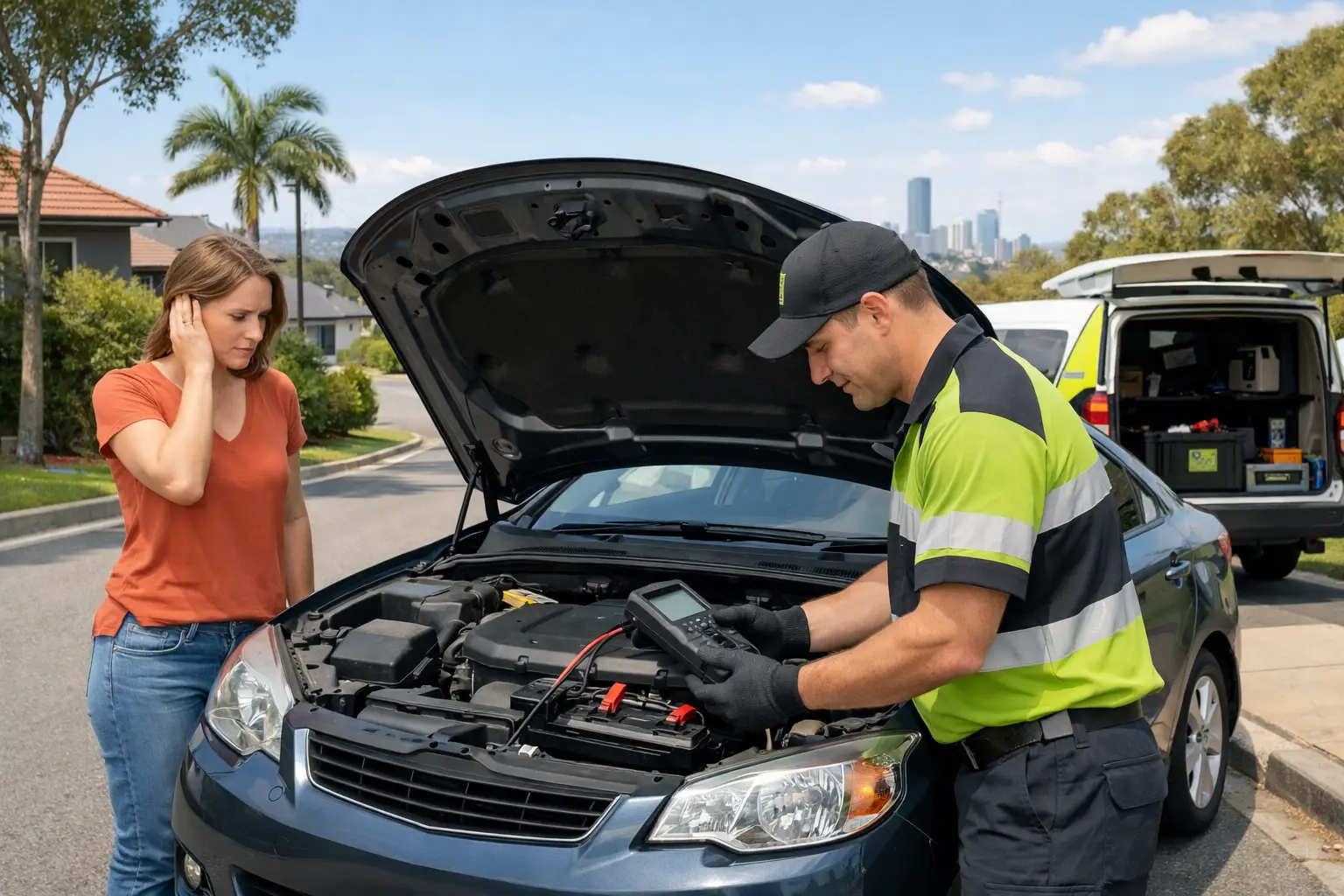
That is why a proper callout starts with testing. A technician can check battery condition, voltage, starting performance, terminals, and charging behavior before recommending a replacement. It is the difference between a quick guess and a fix that makes sense for how your truck works.
Signs You Should Book a Test Rather Than Wait
A slow or labored crank is the obvious sign, but it is not the only one. Pay attention if accessories reset, lights dim when starting, the battery case looks swollen, or there is visible corrosion around the terminals. Repeated jump-starts are another clear warning. A jump may get you through one shift, but it does not restore a worn-out battery or correct a charging fault.
For fleet vehicles and work trucks, preventive testing is often cheaper than an emergency failure. A battery that seems acceptable in mild weather can struggle under a heavier electrical load, after short stop-start runs, or during an early-morning start when the vehicle is needed most.
What a Truck Battery Replacement Service Should Include
The right service is more than dropping in the nearest battery that fits the tray. Trucks can have different starting demands, reserve capacity needs, terminal layouts, hold-down requirements, and electrical accessories. A service vehicle needs a battery matched to the truck, not just a battery that happens to start it once.
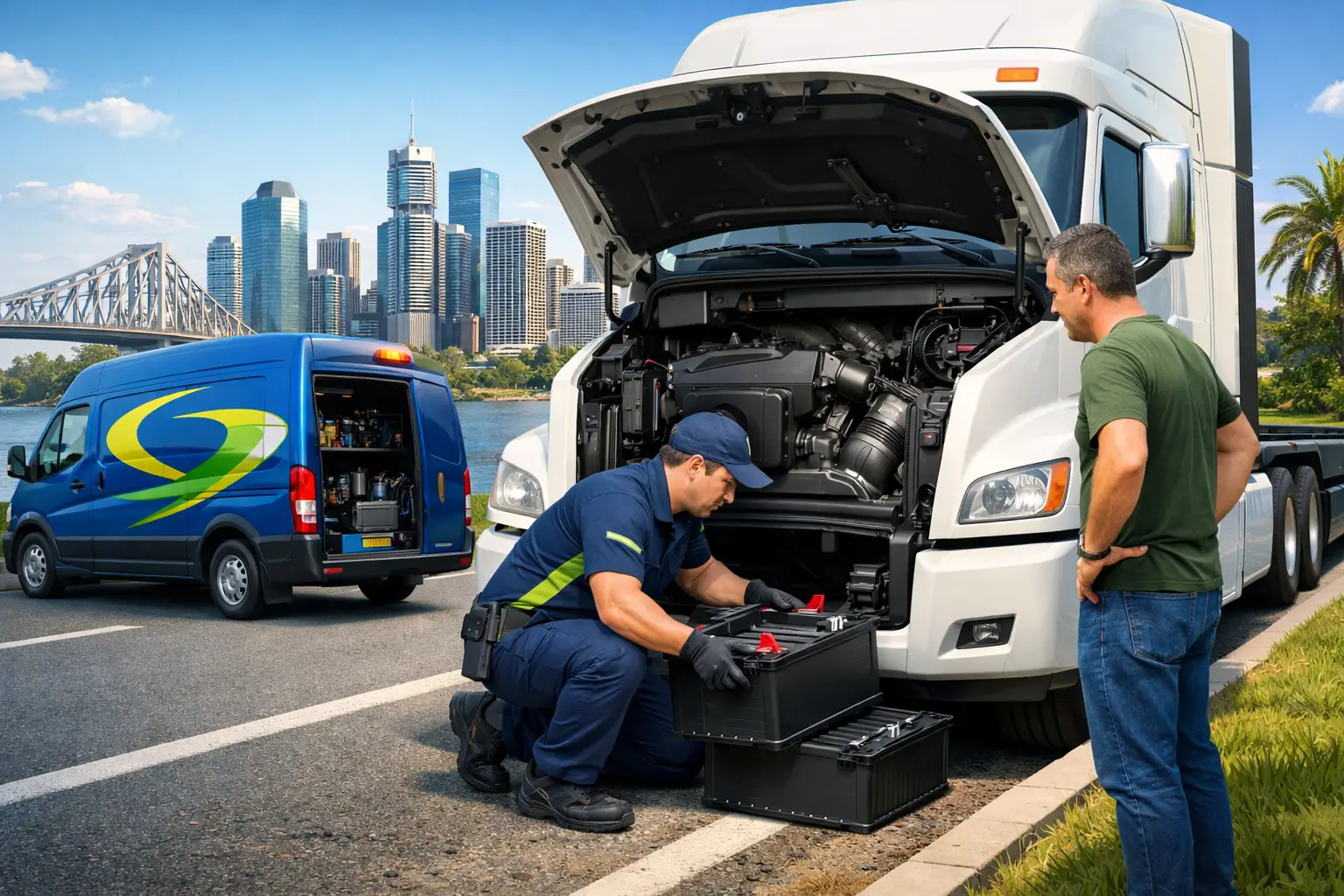
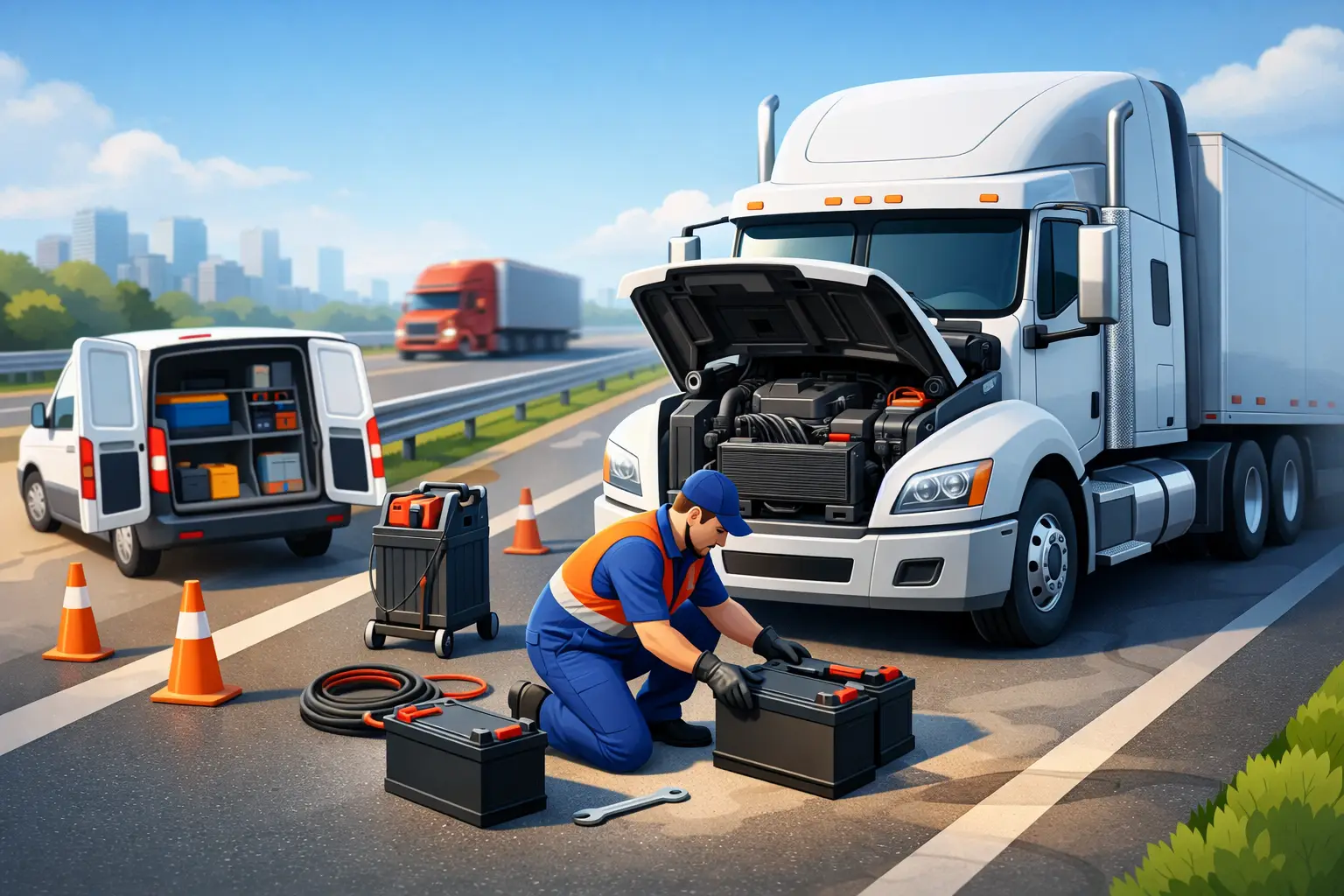
A dependable mobile service should test the existing battery, confirm the correct specification, remove the old unit safely, clean and inspect the connections, fit and secure the replacement, and test the vehicle after installation. The old battery should also be taken away for responsible recycling.
For many drivers, on-site fitting is the biggest advantage. There is no need to find a ride to a parts store, carry a heavy battery across a parking lot, or work around a crowded engine bay with borrowed tools. You stay with the truck while a trained technician handles the job.
Battery Australia provides this kind of practical roadside support with equipped mobile vans, 24/7 availability, and no call-out fees for local service areas. If the battery is the issue, the aim is to complete the test, supply, and fitment in one visit so your schedule is not held up any longer than necessary.
Choosing the Right Battery for the Job
The cheapest battery is not always the best value. A truck that starts once a day and travels long highway distances has different demands from a work vehicle making frequent short runs with tool chargers, warning lights, refrigeration equipment, inverters, or added accessories.
Starting power matters because the engine needs a strong burst of energy to crank reliably. Reserve capacity matters because the battery must support electrical loads when the engine is off or when charging demand is high. The physical fit matters too. Incorrect terminal positions, a loose hold-down, or the wrong battery dimensions can create safety and reliability problems.
Your best option depends on the truck and its workload. A standard starting battery may suit a lightly used pickup, while a commercial vehicle with accessory loads may need a higher-capacity option. If the truck has a dual-battery setup, the starting and auxiliary batteries may serve different jobs. Replacing one with the wrong type can reduce performance or shorten battery life.
A technician should ask how the truck is used, not just look up the make and model. That short conversation helps avoid fitting a battery that is technically compatible but poorly suited to the real workload.
Why Mobile Replacement Beats Waiting for a Workshop
When a truck will not start, towing or workshop booking can turn a battery issue into a full day of lost work. Mobile replacement brings the equipment and battery to you. It is especially useful when the vehicle is blocked in, parked at a job site, sitting in a driveway, or stranded outside normal business hours.
Speed matters, but accuracy matters just as much. A good mobile technician does not simply arrive with one common battery and hope it works. They carry a range of options, test first, and fit the correct unit for the vehicle. That reduces the risk of a second callout and gives you a clear answer about what caused the no-start.
There are situations where a workshop is still the right next step. If testing points to an alternator failure, damaged wiring, a starter problem, or a complex electrical fault, a new battery alone may not solve it. Honest service means telling you when the battery is not the main issue, rather than charging you for a part that will not fix the truck.
How to Avoid the Next Flat Battery
No battery lasts forever, but a few habits can reduce preventable failures. Keep terminals clean and securely tightened. If the truck sits for extended periods, use a suitable maintainer rather than letting the battery discharge deeply. Avoid leaving lights, chargers, or accessories running after shutdown, especially when the vehicle is not driven regularly.
Short trips can also be hard on a battery. Starting takes a substantial amount of power, and a brief drive may not fully replace it. If your truck does mostly short local runs, ask for the charging system and battery condition to be checked before a busy period.
For operators with several vehicles, keep a simple record of battery age, prior jump-starts, and recurring electrical complaints. It will not predict every failure, but it can reveal which vehicles are becoming unreliable before they stop a job in its tracks.
Get Back on the Road Without the Guesswork
A dead truck battery should not force you to gamble on a random replacement, wait days for a workshop opening, or lose a shift to a problem that can often be handled where you are. The right response is fast testing, correct fitment, clear pricing, and a battery suited to the way the truck earns its keep.
If the truck is slow to start or already stranded, act before the delay grows. A properly tested and fitted battery gives you one less thing to worry about when the next job, delivery, or early start cannot wait.