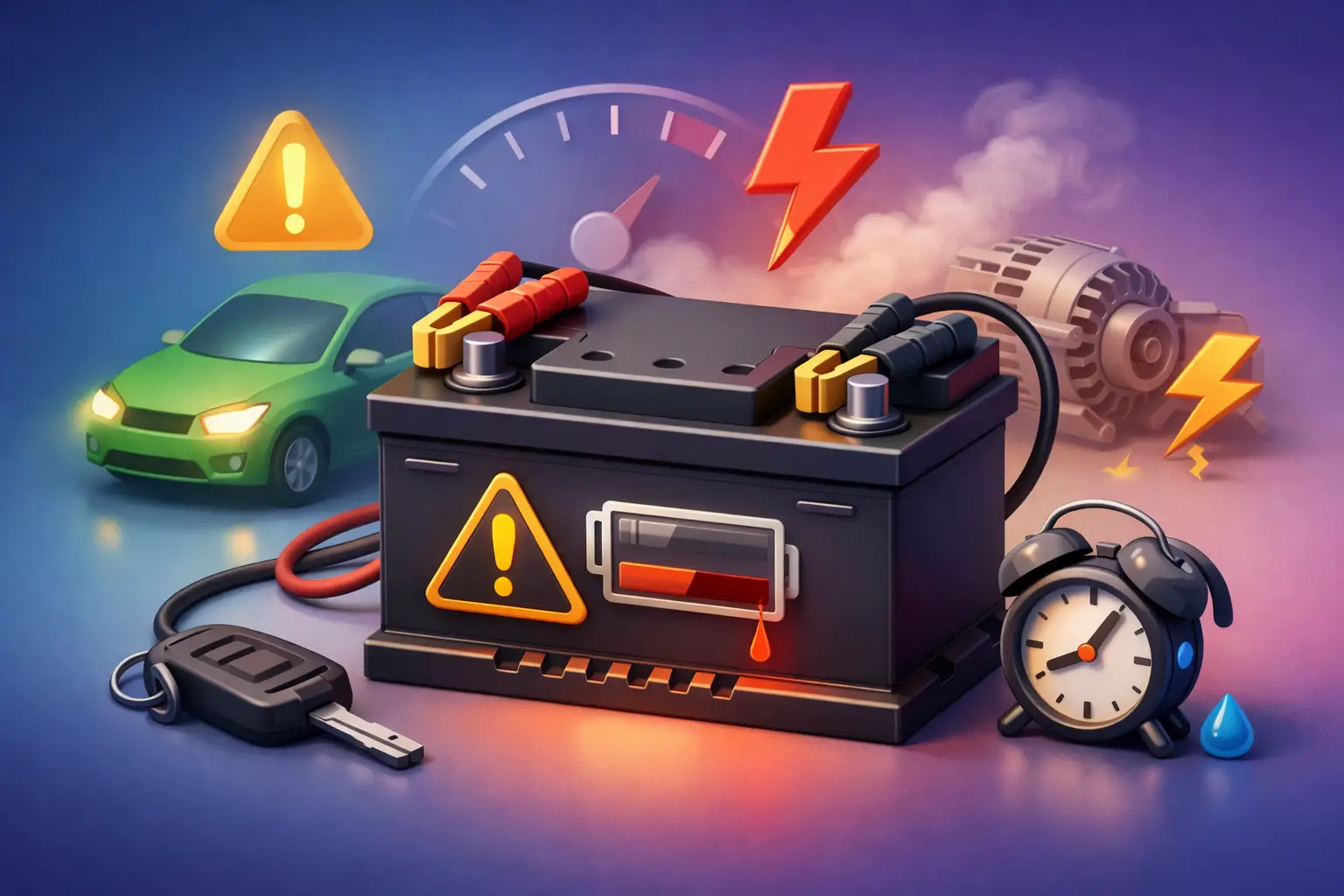
You turn the key, press the start button, and get nothing but a slow crank or dead silence. If you are wondering what causes a battery to go flat, the answer is usually not just one thing. A flat battery is often the result of age, driving habits, weather, charging problems, or something in the vehicle quietly drawing power when it should not.
For most drivers, the real issue is not theory. It is being stuck in the driveway before work, stranded after school pickup, or losing time on a job site because the vehicle will not start. The good news is that a flat battery usually leaves clues before it fails completely.
What causes a battery to go flat most often?
The most common cause is simple battery wear. Car batteries do not last forever, and once they get older, they hold less charge and recover more slowly after each start. In many cases, a battery that seemed fine last week is already on borrowed time.
Short trips are another major reason. Starting a vehicle takes a big burst of power. If you only drive for a few minutes at a time, the alternator may not have enough time to fully recharge the battery. That pattern slowly chips away at battery health, especially in stop-and-go traffic or if the vehicle sits for long stretches between drives.
Lights left on still catch plenty of people out too. Interior lights, headlights, trunk lights, and even a glove box light can flatten a battery faster than you might expect. Newer vehicles may shut some systems down automatically, but not always. It depends on the make, model, and the condition of the battery itself.
Then there is the less obvious stuff. Phone chargers, dash cams, aftermarket stereos, GPS units, and faulty accessories can keep drawing power after the engine is off. A small drain over several hours or overnight is enough to leave you with a no-start in the morning.
Battery age matters more than most drivers think
A lot of people ask what causes a battery to go flat as if it must be a sudden fault. Sometimes it is. But often the battery is simply near the end of its life.
Most car batteries last around three to five years, though that range depends on climate, driving conditions, and how well the vehicle charging system is working. Heat speeds up battery deterioration. Cold weather can expose a weak battery because the engine needs more effort to start while the battery is delivering less power.
An aging battery may still start the car several times, then suddenly fail after one cold morning, one missed drive, or one extra accessory load. That is why battery problems can feel random when they are actually the final stage of a slow decline.
Your alternator might be the real problem
Not every flat battery is caused by the battery itself. If the alternator is weak or failing, the battery may not be recharged properly while you drive. That means you can replace or jump-start the battery, only to end up flat again soon after.
A bad alternator often brings other signs with it. You might notice dim headlights, flickering dash lights, electrical glitches, warning lights on the dash, or a burning smell from the engine bay. In some cases, the vehicle starts fine after a jump but dies again once the battery charge is used up.
This is where testing matters. A battery can seem dead when the real fault is in the charging system. Replacing the battery without checking the alternator may only fix the symptom for a short time.
Parasitic drain can flatten a good battery
Parasitic drain means something in the vehicle keeps using power after the ignition is off. A small amount of draw is normal because modern vehicles need to maintain memory settings, alarms, and onboard computers. The problem starts when that draw is too high.
Common causes include faulty relays, malfunctioning modules, glove box or trunk lights that stay on, and poorly installed aftermarket electronics. A good battery can still go flat if the drain is strong enough or the vehicle sits unused for too long.
This is one of the more frustrating faults because the battery may test fine one day and still be dead the next. If your battery keeps going flat after charging or replacement, and you are not leaving lights on, a parasitic drain is worth checking.
Driving patterns can work against you
Not all battery failures come from faults. Sometimes normal use is the issue.
If you mostly take short trips, use a lot of accessories, or leave the vehicle parked for days at a time, the battery may never get a proper recovery charge. This is common for second cars, work utes that sit over weekends, and family vehicles used only for school runs or errands.
The trade-off is straightforward. Modern vehicles are packed with convenience features, but those features increase the demand on the battery. Heated seats, infotainment systems, charging ports, cameras, and start-stop systems all add electrical load. That is manageable when the vehicle is driven regularly and the charging system is healthy. It becomes a problem when the battery is older or the vehicle use is irregular.
Weather plays a bigger role than people expect
Extreme temperatures are hard on batteries. Hot weather can evaporate electrolyte fluid and speed up internal corrosion, which shortens battery life. Cold weather reduces battery performance and makes starting harder because engine oil thickens and the engine needs more power to turn over.
That is why a battery that seemed acceptable in mild weather can fail as soon as the temperature shifts. Heat often does the long-term damage, while cold reveals it.
If your vehicle struggles more in the morning, after cold nights, or during heat waves, the battery may already be weakened. Weather may not be the root cause, but it often triggers the final failure.
Corrosion and loose connections can mimic a dead battery
Sometimes the battery is not flat at all. The issue can be poor connection at the terminals.
Corrosion on the battery posts interrupts the flow of current. Loose or damaged terminals can do the same. The result is familiar: slow cranking, clicking sounds, flickering power, or a complete no-start. Because the symptoms look like a flat battery, many drivers assume the battery itself has failed.
The fix may be as simple as cleaning the terminals and tightening the connections, but if corrosion is severe or keeps returning, it can point to battery leakage or charging issues. It depends on the age of the battery and the condition of the cables.
Warning signs before the battery goes flat
A battery rarely fails with no warning at all. The signs are usually there, just easy to ignore when the car still starts.
Slow cranking is the classic one. If the engine turns over more sluggishly than usual, the battery may be losing strength. You might also notice headlights dimming when starting, dashboard warnings, power windows moving slower than normal, or electronics acting strangely.
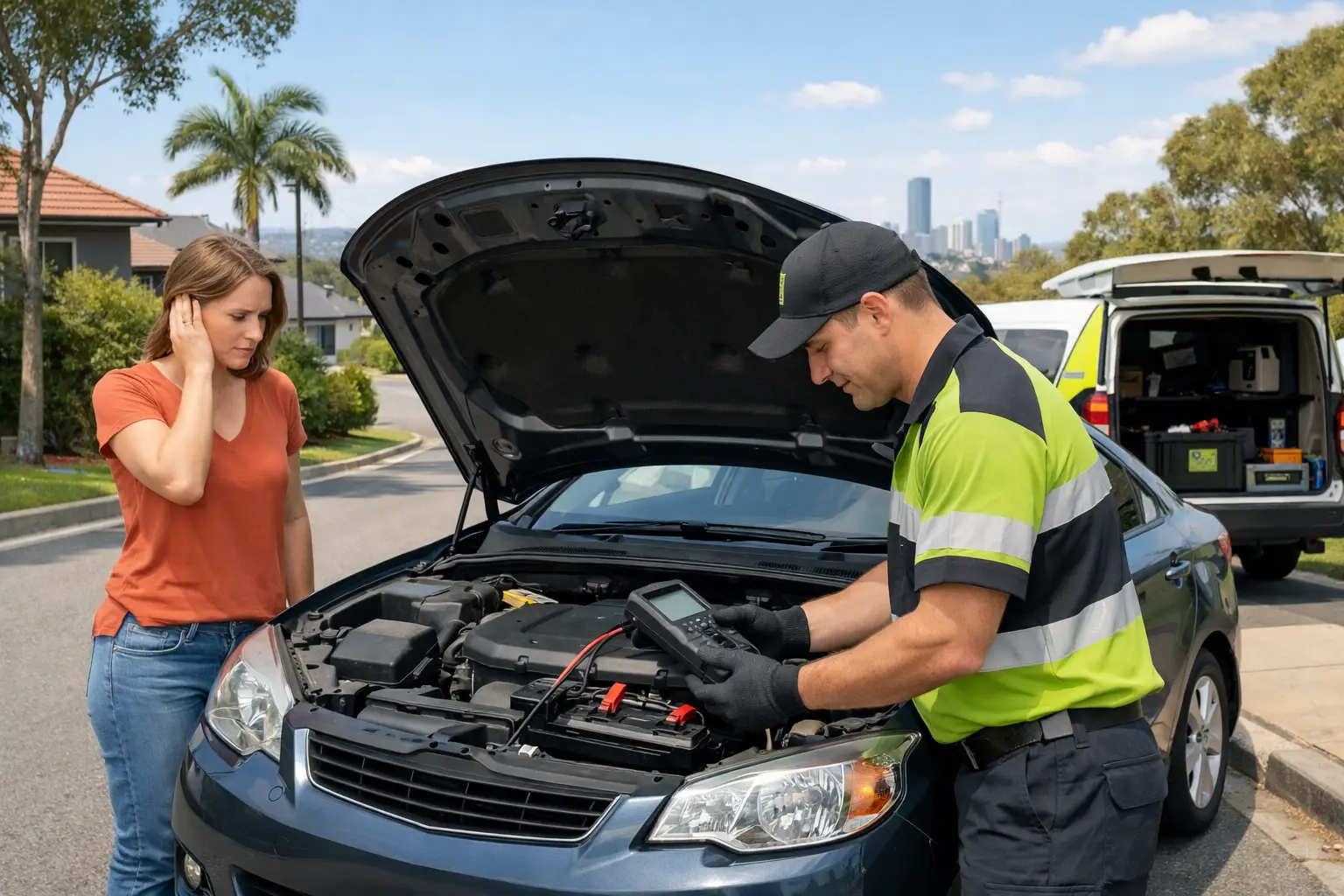
If you have needed a jump-start more than once, that is already a sign that something needs attention. A one-off flat battery after leaving lights on is one thing. Repeated battery trouble means the battery, alternator, or electrical system should be tested properly.
When a jump-start is enough and when it is not
A jump-start can get you moving, but it does not tell you why the battery went flat. If the cause was an interior light left on, a jump and a decent drive may solve it. If the battery is old, the alternator is weak, or there is a parasitic drain, the problem will come back.
That is the difference between a temporary fix and an actual repair. If the battery goes flat again soon after being charged, or if the vehicle still struggles to start, testing is the next step. Guessing usually costs more time than it saves.
How to reduce the chances of another flat battery
The practical stuff makes a difference. Drive long enough to let the battery recharge, especially after frequent starts. Turn off lights and accessories before leaving the vehicle. If a car sits unused, start and drive it regularly or use a suitable charger or maintainer.
Have the battery and charging system checked if the battery is more than a few years old, especially before winter or a long trip. Pay attention to slow starts and electrical odd behavior. Those early signs are easier to deal with than a full no-start.
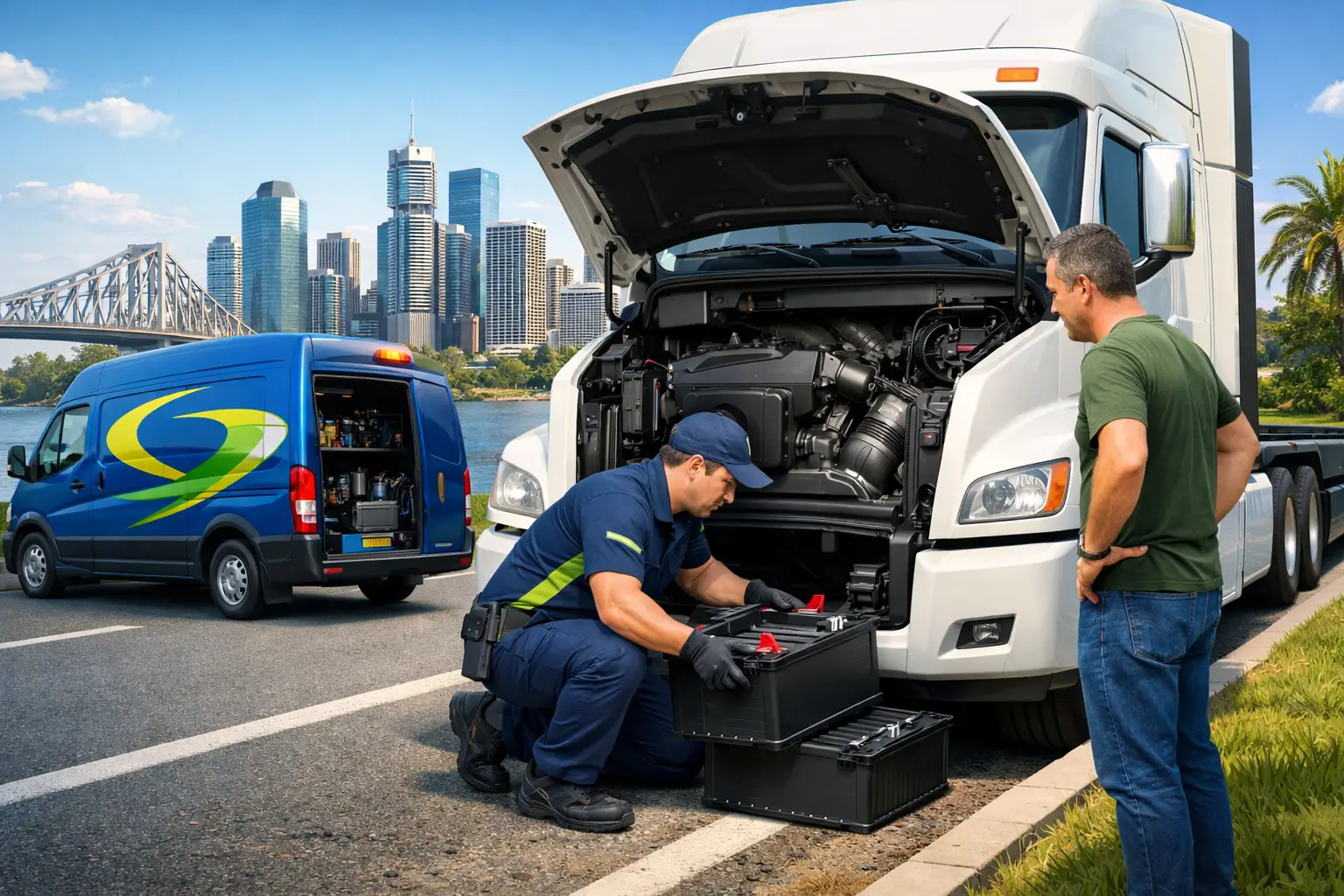
If the battery is clearly near the end of its life, replacement is usually the smarter move than waiting for a complete failure. For drivers who need the vehicle every day, reliability matters more than squeezing out one last month.
A flat battery is rarely convenient, but it is usually predictable in hindsight. If your vehicle is cranking slowly, losing charge, or needing repeated jump-starts, treat that as the warning it is. Getting it checked early is a lot easier than dealing with a dead car when you are already late.