A dead battery rarely happens when you have time to spare. It happens in the driveway before school drop-off, at a job site with tools waiting in the back, or in a parking lot after a long shift. When weighing mobile battery service vs workshop, the right option comes down to where your car is, how urgently you need it moving, and whether the battery is actually the problem.
A workshop can be the right place for complex electrical faults. But if the vehicle simply will not start and the battery has failed, waiting for a tow, arranging a ride, and sitting in a repair queue can turn a straightforward job into an all-day disruption. A mobile battery technician brings the testing, replacement battery, and fitting service to you.
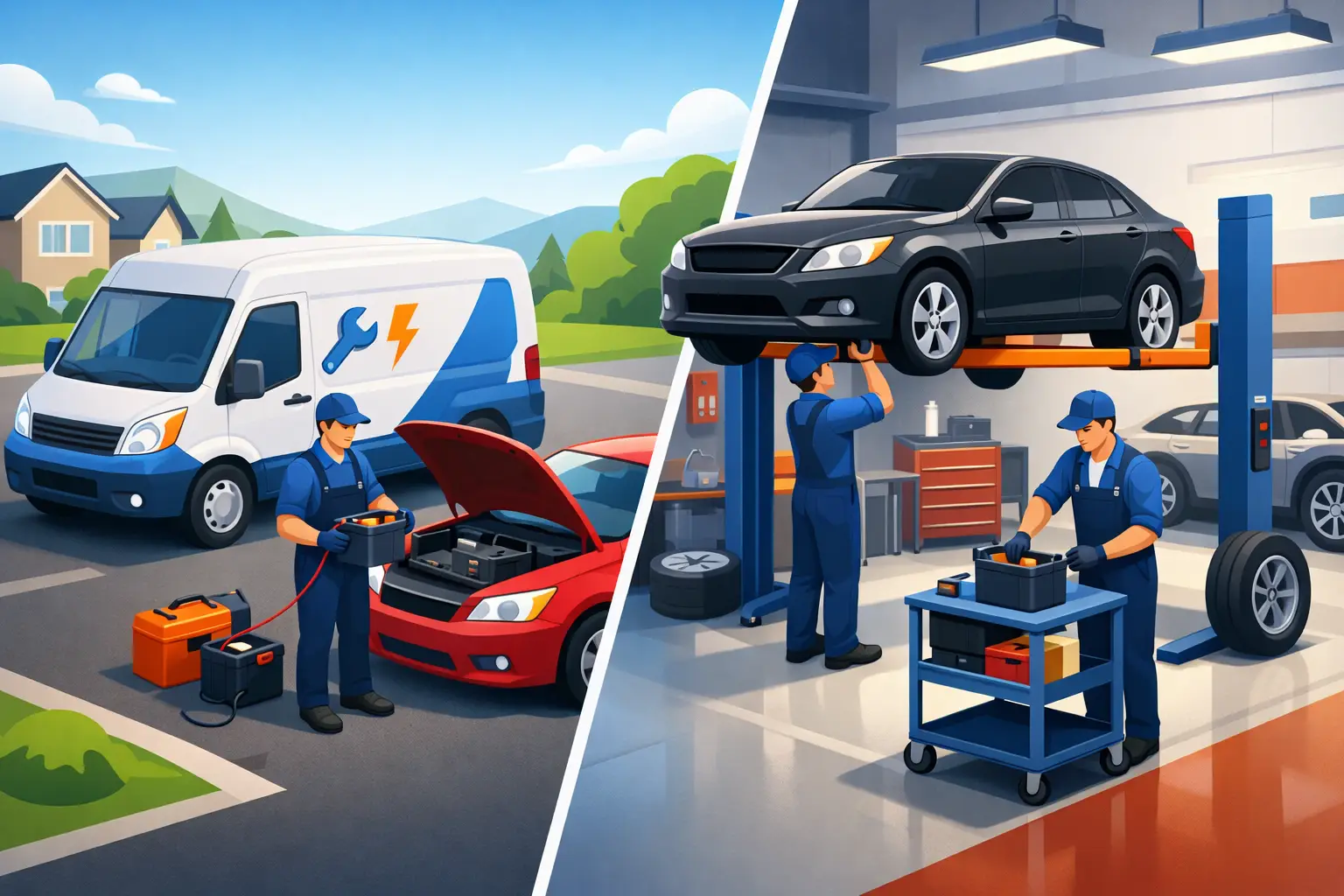
The biggest difference is where the work happens
With a workshop, you take the vehicle to the technician. That works well when it is drivable, you can book ahead, and you need broader mechanical or electrical diagnosis. A workshop has lifts, specialist equipment, and the time to investigate faults that go beyond the starting battery.
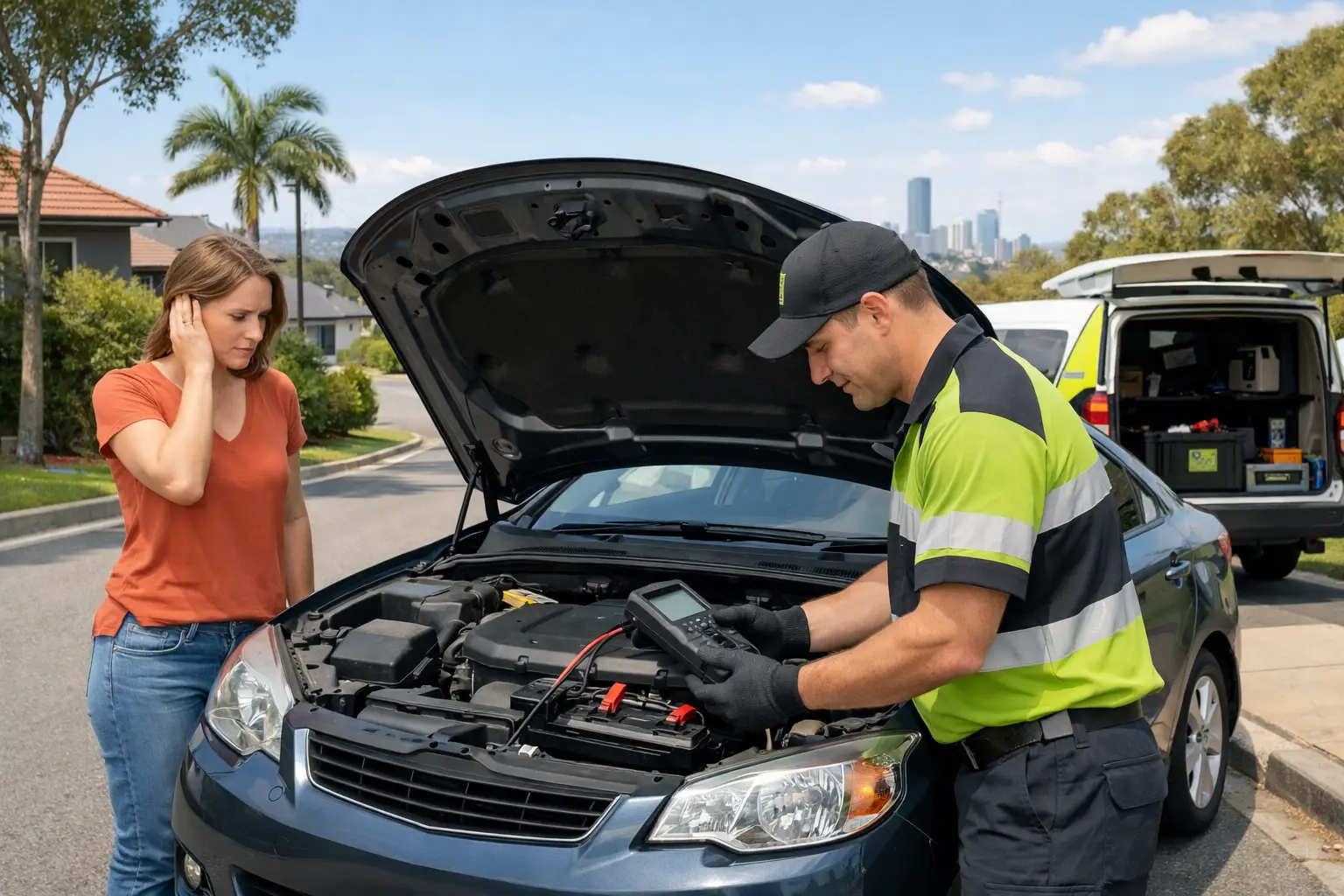
With mobile battery service, the technician comes to the vehicle at home, work, roadside, or a parking lot. The van carries the equipment needed to test the battery and charging system, identify a suitable replacement, fit it correctly, and get the vehicle running again. For most flat or failed car batteries, there is no need to move the car first.
That distinction matters when the battery failure is urgent. If the car cannot start, getting it to a workshop may mean a jump-start that does not hold, calling a tow truck, or risking another breakdown on the way. Mobile service removes those extra steps.
Mobile battery service vs workshop for speed
For a no-start situation, mobile service is usually the faster route. You make one call, explain the vehicle details and location, and a technician arrives with a replacement battery if testing confirms it is needed. There is no towing wait, no drop-off process, and no need to organize transport home.
Battery Australia is set up for this type of call across Brisbane, Ipswich, and the Gold Coast, with fully equipped vans, 24/7 availability, no call-out fees, and a target of completing most jobs in under 60 minutes. That is particularly useful for commuters, families, tradies, and fleet operators who lose money or time every hour a vehicle is off the road.
A workshop can still be quick when you are already nearby, the vehicle starts reliably, and the shop has an open appointment. The problem is that a dead battery does not follow your schedule. Workshops may have limited hours, a queue of booked repairs, or no immediate stock for your vehicle. Mobile service is built around the fact that the car is stuck where it is.
Cost is more than the battery price
It is reasonable to compare battery prices, but the lowest shelf price is not always the lowest total cost. A workshop visit may add towing, ride-share fares, time away from work, or the inconvenience of leaving a vehicle behind. If you need to pay someone to collect the car later, the cost climbs again.
Mobile service can look like a premium choice until you account for those extras. A technician arrives, tests the issue, supplies the right battery, fits it, and handles the old battery. That is one job, not a chain of separate problems.
The comparison should be transparent. Ask what is included in the quote: the battery itself, testing, installation, terminal cleaning if needed, disposal of the old unit, and warranty details. Also ask whether there is a call-out fee. A clear quote lets you compare like for like instead of being surprised after the vehicle is running.
Testing matters before replacing anything
Not every no-start is a bad battery. Loose terminals, corrosion, a failing alternator, a parasitic drain, damaged wiring, or a starter issue can create similar symptoms. Replacing a battery without checking it first can leave you with the same problem an hour later.
A good mobile technician does more than install a new battery. They test the current battery and assess the charging system where appropriate. If the battery has reached the end of its life, replacement makes sense. If the battery is healthy but not being recharged properly, you need to know that before spending money on a battery alone.
This is where a workshop has an advantage for difficult faults. If testing suggests a deeper electrical issue, the vehicle may need more detailed diagnosis than a roadside visit can provide. A reliable technician should say so plainly. The goal is not to sell a battery at all costs. The goal is to get the right repair done.
When a mobile service is the better choice
Mobile replacement is generally the practical option when the battery has failed and the vehicle is stranded. It is also useful when you have a busy day, young children, limited mobility, a work vehicle loaded with equipment, or a fleet vehicle that needs to return to service quickly.
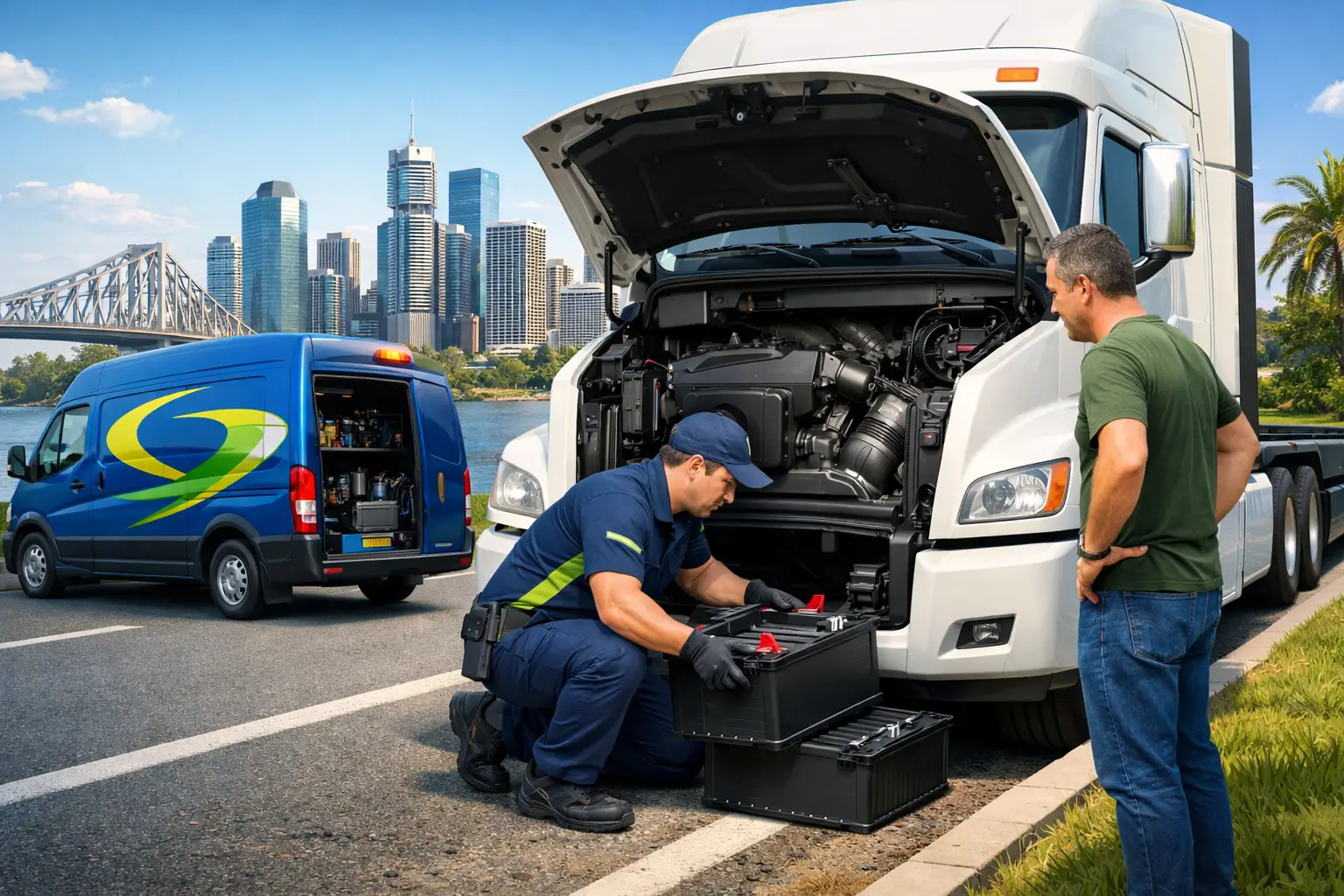
It is not limited to standard passenger cars, either. The same convenience can apply to trucks, motorcycles, marine batteries, golf carts, mobility scooters, deep-cycle systems, and battery-dependent equipment. The key is providing accurate details before the technician arrives, including make, model, year, engine size, and any start-stop or auxiliary battery requirements.
Newer vehicles can be more particular about battery type and fitment. Start-stop vehicles often require an AGM or EFB battery rather than a basic flooded battery. Some vehicles also need battery registration or reset procedures after installation. This is not the time to guess based on what fits physically in the tray.
When a workshop makes more sense
Choose a workshop if the vehicle starts and drives safely, but you are already dealing with recurring electrical issues. Dim lights while driving, warning messages, a battery that goes flat repeatedly, burning smells, damaged cables, or charging-system warnings can point to more than a worn-out battery.
A workshop is also the better option when the vehicle needs several jobs at once. If you are due for service, brakes, tires, or repairs alongside battery work, combining those tasks may be more efficient. For a classic car, a modified 4WD, or a vehicle with unusual electrical accessories, a workshop familiar with that setup may be worth the extra time.
The decision is not mobile service good, workshop bad. It is about matching the service to the fault. A dead battery on a Tuesday morning needs a fast, practical fix. An ongoing electrical problem needs proper investigation.
How to avoid another flat battery
Once the car is running again, a few habits can reduce the chance of another surprise. Drive the vehicle regularly enough to recharge the battery, especially if you mostly take short trips. Make sure lights, chargers, dash cameras, and accessories are not drawing power after shutdown. Keep terminals clean and secure, and consider a maintenance charger for vehicles, boats, campers, or equipment that sit unused for long periods.
Battery age matters too. Many starting batteries begin to lose reliability after several years, particularly in hot conditions and stop-start traffic. If starting is becoming slower or you have needed repeated jump-starts, arrange a test before you are stranded.
If your vehicle will not start right now, do not turn a simple battery failure into a tow, a workshop wait, and a lost day. Get the battery tested where the vehicle is, ask for a clear answer on what failed, and choose the repair that gets you moving with confidence.