Your car will not accept just any 12-volt battery. A battery can look close enough, fit on the tray, and still be wrong for the vehicle. Wrong terminal positions can leave the cables short. Too little starting power can cause hard starts. The wrong battery technology can trigger problems in vehicles with stop-start systems.
If you are asking, “what battery fits my car?”, the reliable answer comes down to your vehicle’s required size, terminal layout, cold cranking amps, reserve capacity, and battery type. Get those details right and you avoid a second breakdown, a poor fit, or an expensive electrical issue.
What Battery Fits My Car? Start With the Exact Vehicle Details
The quickest way to identify the correct battery is to use your vehicle’s make, model, year, engine size, and trim level. Two versions of the same model can use different batteries depending on engine type, factory options, and whether the vehicle has stop-start technology.
Check the owner’s manual first if it is available. The existing battery label can also provide useful clues, including the group size, battery type, cranking rating, and terminal arrangement. Just do not assume the old battery is definitely correct. Previous owners, workshops, and roadside replacements sometimes fit the nearest available option rather than the best-match battery.
A battery professional can confirm compatibility from the registration or VIN, then test the existing battery and charging system before fitting a replacement. That matters because a flat battery is not always a failed battery. A charging fault, loose terminal, parasitic drain, or worn alternator can create the same symptoms.
The Five Things That Must Match
A car battery is more than a box with positive and negative posts. These five factors determine whether it will fit and perform as it should.
1. Physical size and hold-down fit
Battery cases come in standardized sizes, often called group sizes or case sizes. The length, width, and height must fit the battery tray, while the base needs to work with the vehicle’s hold-down clamp.
A battery that is too tall may contact the hood. One that is too small can move around under braking and vibration, damaging the case, terminals, or cables. Never rely on a loose strap, cardboard packing, or a “close enough” fit to secure a battery.
2. Terminal position and terminal type
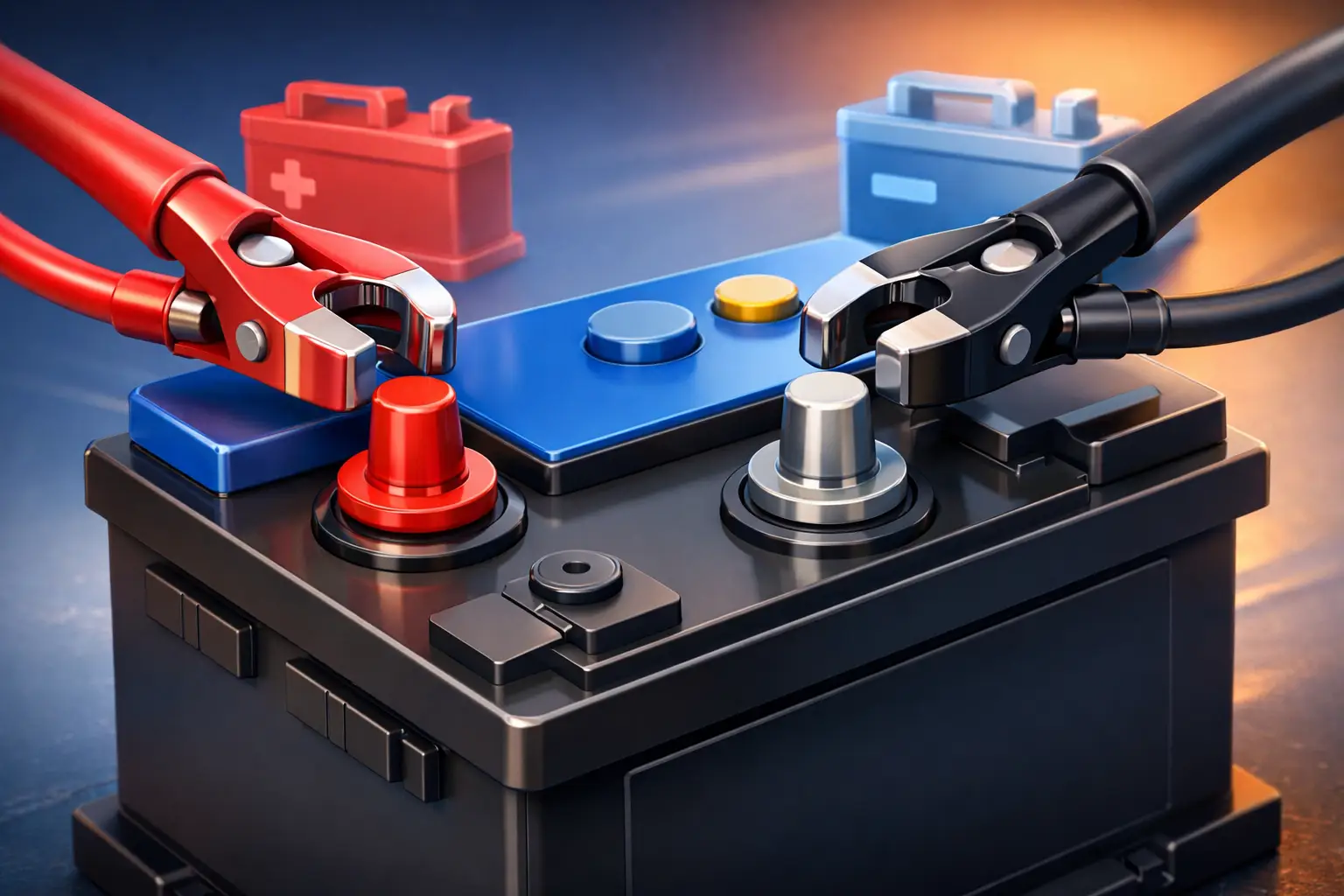
Look at the battery from the terminal side. Is the positive terminal on the left or right? This is called polarity or terminal layout, and it is a common reason a replacement battery will not connect.
Cables are not designed to be stretched across the battery. Forcing them can crack terminals, strain wiring, or create a short circuit. Terminal shape also matters. Most passenger vehicles use standard top posts, but some use side terminals or specialized configurations.
3. Cold cranking amps
Cold cranking amps, usually shown as CCA, measure how much starting power a battery can deliver in cold conditions. Even in warm climates, CCA remains a useful indicator of starting performance.
The replacement should meet or exceed the vehicle manufacturer’s requirement. Going slightly higher is often fine when the physical size and technology are correct. Going lower to save a few dollars can mean slower cranking, reduced battery life, and a higher chance of being stranded when the battery ages.
4. Reserve capacity
Reserve capacity tells you how long a fully charged battery can support electrical loads if the charging system is not operating properly. It is especially relevant for vehicles with accessories such as dash cameras, auxiliary lighting, refrigeration, work equipment, or frequent short-trip use.
A family SUV, work ute, or vehicle used for school runs may need stronger reserve capacity than a lightly used compact car. The right choice depends on how the vehicle is used, not only what fits in the tray.
5. Battery technology
This is where many replacement mistakes happen. Conventional flooded batteries, enhanced flooded batteries (EFB), absorbent glass mat batteries (AGM), and lithium batteries are not interchangeable by default.
Vehicles with stop-start systems commonly require EFB or AGM batteries because they are built to handle frequent engine starts and repeated cycling. Replacing an AGM battery with a standard flooded battery may seem cheaper on the day, but it can shorten battery life and affect stop-start operation. In many cases, like-for-like replacement is the right call. An upgrade may be possible, but only when it suits the vehicle’s charging system and specifications.
Why “It Starts” Does Not Mean It Is the Right Battery
A battery can start your car today and still be a poor match. This is common when a battery has been selected only by terminal position or by its ability to fit physically.
Modern vehicles place heavy demands on their batteries. Infotainment screens, electric power steering, safety systems, electronic parking brakes, security systems, and stop-start features all depend on stable voltage. A battery with insufficient capacity may cause warning lights, intermittent electrical faults, or stop-start failure before it becomes obviously flat.
Some late-model vehicles also need the new battery registered or coded to the battery management system. This tells the vehicle that a fresh battery has been installed and helps it charge correctly. Skipping this step can reduce the life of the replacement battery in vehicles designed for battery monitoring.
Check Before You Buy a Car Battery
If your car is parked safely at home, you can gather a few details before ordering. Read the label on the existing battery, note its dimensions, confirm the positive terminal side, and look for AGM or EFB markings. Take a clear photo of the label and the battery tray if you are unsure.
Do not remove the battery just to inspect it unless you know the correct procedure. Some vehicles can lose settings, require window or radio resets, or need a memory saver during replacement. If the case is swollen, leaking, cracked, or hot, do not handle it unnecessarily. Battery acid and electrical current both demand care.
When the car is already dead, a test is more useful than guessing. A voltage reading alone does not tell the full story. A proper battery test checks available cranking performance, while a charging-system check helps rule out alternator problems that could drain a new battery too.
Common Signs Your Battery Is the Wrong Size or Failing
Slow cranking is the obvious warning, but it is not the only one. You may notice headlights dimming when the engine is off, dashboard warnings appearing and disappearing, stop-start no longer working, central locking becoming unreliable, or the car needing a jump-start after short periods parked.
A battery more than three years old deserves closer attention, particularly in hot conditions. Heat accelerates battery wear, and a battery can fail with little warning after months of seeming fine. If you depend on your car for work, family pickups, deliveries, or appointments, testing it before it fails is the easier option.
Get the Right Battery Fitted Without the Guesswork
The best replacement is not automatically the cheapest battery or the biggest battery that will fit. It is the correct specification for your vehicle, installed securely, tested properly, and backed by a clear warranty.
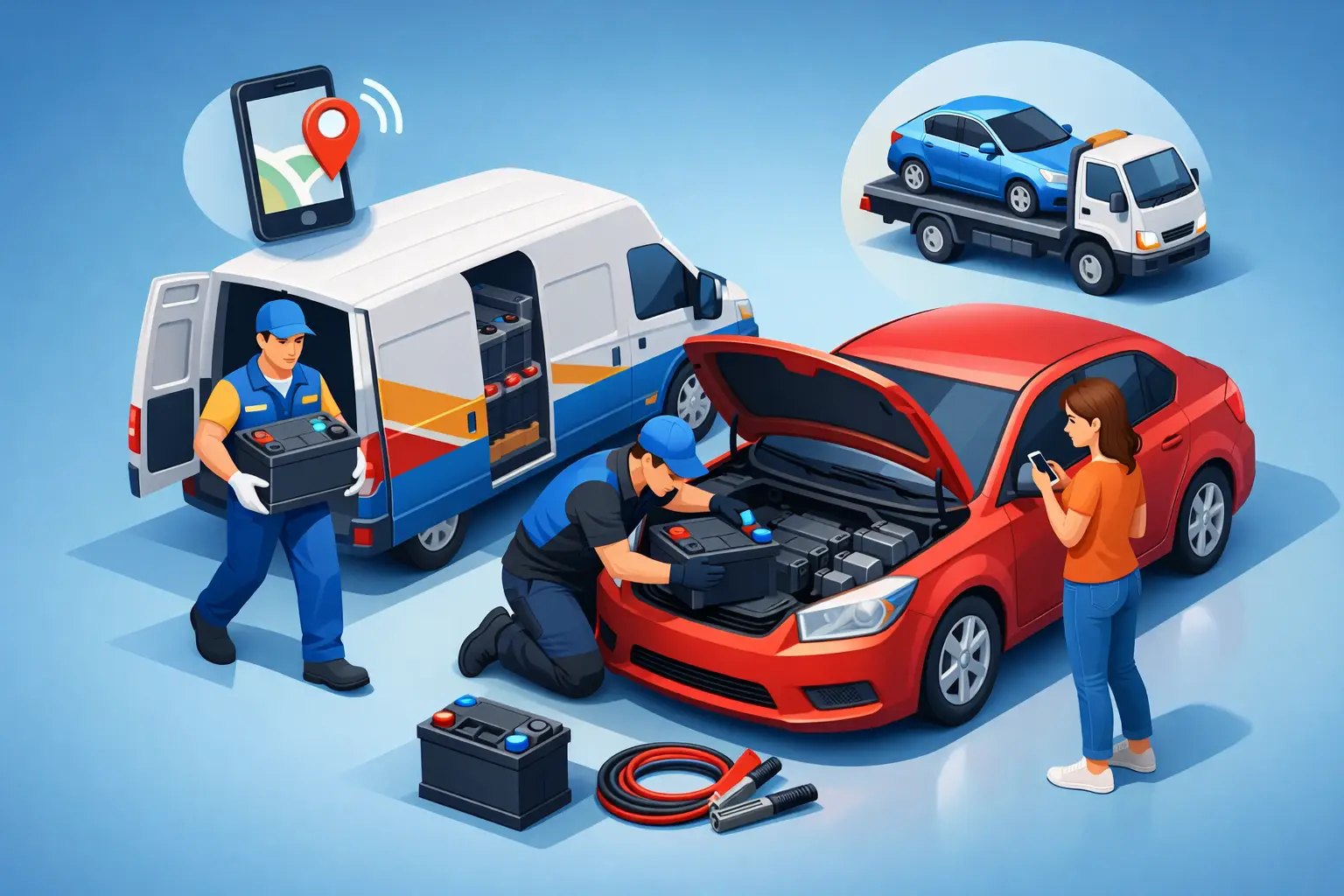
For drivers in Brisbane, Ipswich, and the Gold Coast, Battery Australia can test, supply, and fit the correct battery on-site, with no call-out fee. That means no towing a dead car, no carrying a heavy battery through a parking lot, and no trying to decode battery labels while stranded.
If your vehicle is starting slowly, do not wait for the next fuel stop, school run, or job site to become a breakdown. Have the battery checked while the car can still get where it needs to go.