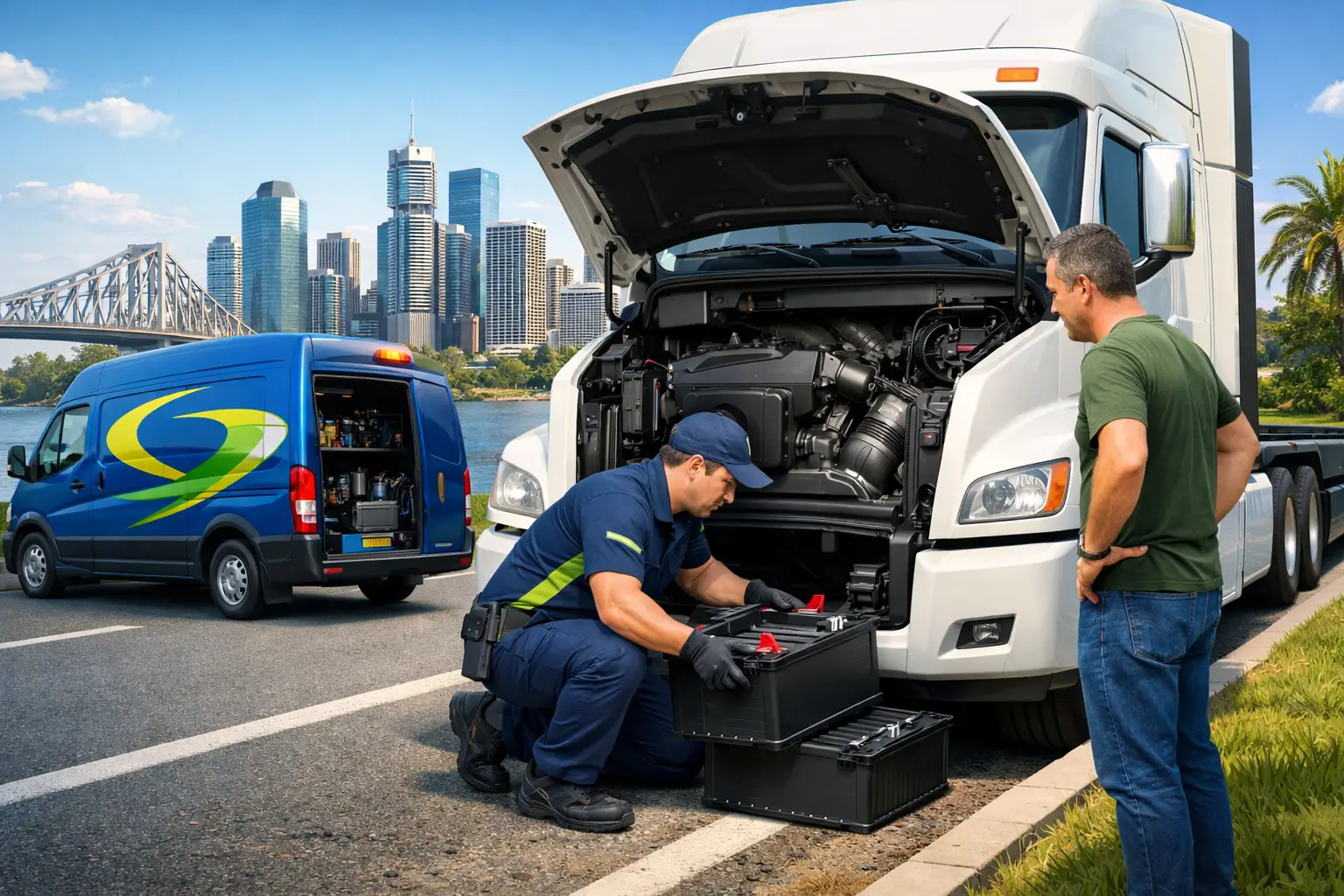
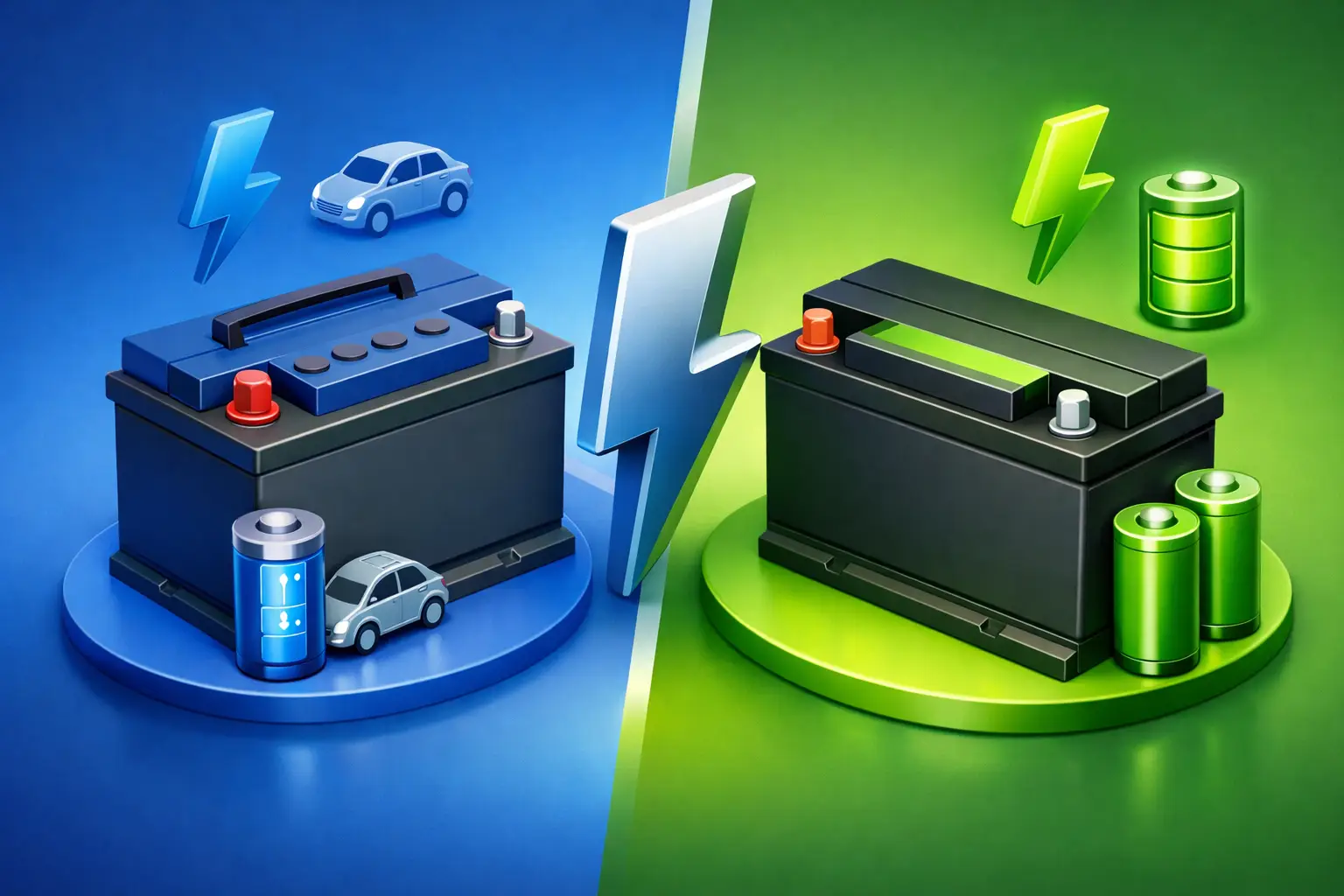
A battery can look fine one day and leave you stuck the next. If you’re weighing agm vs lithium battery options, the right choice comes down to how you use the vehicle or equipment, how often you cycle the battery, and how much hassle you want later.
For some people, AGM is the practical, lower-cost answer. For others, lithium saves weight, charges faster, and lasts long enough to justify the higher upfront price. The trick is not buying the most advanced battery on paper. It’s buying the one that suits the job.
AGM vs lithium battery: the real difference
AGM stands for Absorbent Glass Mat. It’s a sealed lead-acid battery designed to handle vibration better than a standard flooded battery and deliver reliable power for starting and some deep-cycle use. It’s widely used in cars with stop-start systems, 4WD setups, marine applications, backup power, and caravans.
Lithium batteries, usually lithium iron phosphate for these applications, are built differently. They are much lighter, hold voltage more consistently, recharge faster, and can usually be discharged deeper without damaging the battery. That’s why they are common in caravans, camping setups, trolling motors, solar storage, and other applications where cycle life matters.
On the surface, lithium looks like the obvious winner. In practice, it depends. If you need a dependable, cost-effective battery and your charging system is set up for AGM, sticking with AGM can be the smarter move. If weight, runtime, and long-term cycling are priorities, lithium often pulls ahead.
Upfront cost vs long-term value
This is where most decisions get made.
AGM batteries are cheaper to buy. If you’re replacing a battery in a vehicle, adding backup power, or running equipment that does not see heavy daily cycling, AGM often makes financial sense. You pay less on day one and, for many users, that matters more than theoretical savings years down the track.
Lithium costs more upfront. Sometimes a lot more. That higher buy-in can be hard to justify if the battery only gets occasional use. But if you regularly run a fridge in a caravan, power accessories on a boat, or rely on stored power while off-grid, lithium’s longer cycle life can make the total cost over time more attractive.
The important part is being honest about usage. Buying lithium for a setup that gets used three weekends a year may not be great value. Buying AGM for a system that gets heavily cycled every day can become a false economy.
Weight, space, and performance on the move
Weight matters more than people think.
An AGM battery is significantly heavier than a lithium battery of similar usable capacity. In a passenger car, that may not be a dealbreaker. In a caravan, camper trailer, 4WD touring rig, boat, or mobility setup, that extra weight adds up fast. It affects fuel use, payload, balance, and how much gear you can legally and safely carry.
Lithium is a clear winner here. You get more usable energy for less weight, which is a big advantage if you’re traveling, towing, or working out of a vehicle every day. It also helps when battery space is tight and you want more power without adding another heavy unit.
AGM still has a place, especially where extra weight is not critical or where the system was already built around it. But if every kilogram counts, lithium is hard to ignore.
Charging speed and usable capacity
This is one of the biggest practical differences between AGM and lithium.
AGM batteries do not like being deeply discharged on a regular basis. To preserve service life, many users try to avoid taking them much below around 50 percent state of charge. That means a 100Ah AGM does not really give you 100Ah of comfortably usable power in normal conditions.
Lithium can usually be discharged much deeper without the same penalty. That gives you more usable capacity from the same rated size. In plain terms, a lithium battery often does more real work than an equivalent AGM.
Lithium also charges faster. That matters if you’re topping up from solar, alternator charging, or a charger during limited driving time. Faster charging means less waiting around and more confidence that your battery bank will recover properly between uses.
AGM can still perform well, but it generally takes longer to get back to full charge, and partial charging over time can shorten battery life. For people who move often, camp off-grid, or rely on daily battery recovery, lithium is usually easier to live with.
Lifespan and maintenance
If you hate replacing batteries, lifespan matters.
AGM is low maintenance compared with traditional flooded batteries. There is no topping up with water, and they are sealed and generally reliable when used correctly. But they still have limits. Deep discharges, chronic undercharging, and high heat can shorten their life.
Lithium generally lasts longer in cycle-based applications. It handles repeated charging and discharging better, and voltage delivery stays more stable as the battery drains. That can translate to better performance for appliances and accessories that do not like voltage drop.
That said, lithium is not magic. It needs the right charging profile, quality components, and a battery management system that protects the cells. A cheap or poorly matched lithium setup can create its own problems. The battery chemistry may be advanced, but the install still needs to make sense.
Is AGM or lithium better for starting?
For standard engine starting, AGM is often the more straightforward option.
Many cars, SUVs, and light commercial vehicles are designed around lead-acid battery charging systems. If the vehicle came with AGM, replacing like-for-like is often the safest path. That is especially true in stop-start vehicles or where the manufacturer specifies AGM.
Lithium starting batteries do exist, and they can work very well in performance or specialty setups where weight reduction is a major goal. But they are not automatically the best choice for every road vehicle. Compatibility, charging system behavior, temperature conditions, and manufacturer recommendations all matter.
If your main problem is a dead starter battery in a daily driver, AGM is usually the practical answer. If your main goal is powering accessories for long periods, lithium starts making more sense in the auxiliary role.
Best uses for each battery type
AGM works well for vehicle starting, stop-start systems, backup power, moderate deep-cycle use, and setups where budget matters. It is also a sensible option when the charging system and battery tray are already designed around AGM and you want a direct replacement without reworking the setup.
Lithium is usually better for caravans, camping, marine house loads, off-grid power, mobility equipment, and other applications where deep cycling, fast charging, and low weight are major advantages. It is especially useful when you need more usable power without adding bulk.
That does not mean every caravan should automatically get lithium or every 4WD should stay on AGM. A weekend user with light power needs may be perfectly happy with AGM. A full-time traveler running fridges, lights, inverters, and solar will likely appreciate what lithium brings.
The compatibility question people miss
The battery itself is only part of the job.
When comparing agm vs lithium battery options, you also need to look at the charger, alternator, DC-DC charger, solar regulator, and any built-in system settings. AGM is generally easier to slot into existing lead-acid setups. Lithium may require charger upgrades or system adjustments to work properly and safely.
That extra setup cost can change the value equation. A lithium battery that needs supporting hardware is not the same financial decision as a simple AGM swap. On the other hand, if you’re building a new system from scratch, it may make sense to design it around lithium from the start.
This is also why battery advice should be application-specific. What works in a boat may not be ideal in a stop-start SUV. What works in a solar shed may not suit a caravan that gets charged from the tow vehicle every day.
So which one should you choose?
Choose AGM if you want a lower upfront cost, a straightforward replacement, and reliable performance in a vehicle or moderate-use deep-cycle setup. It is a strong option when compatibility is already sorted and the battery is not being heavily cycled every day.
Choose lithium if you want less weight, more usable capacity, faster charging, and longer service life in a setup that sees regular deep cycling. It costs more at the start, but for the right use case it can be the better buy over time.
If you’re not sure, the safest move is to start with the application, not the marketing. A battery should match the way you actually drive, travel, work, or camp – not the way you imagine you might one day.
A good battery choice should make life easier, not more complicated. Pick the one that fits the job, charges properly, and keeps you moving without second-guessing every trip.